






Internal Quality Assurance Cell (IQAC)
About Internal Quality Assurance Cell (IQAC)
The Internal Quality Assurance Cell (IQAC) of PSIT–Pranveer Singh Institute of Technology (Pharmacy) was established in 2021 in accordance with the guidelines of the National Assessment and Accreditation Council (NAAC). IQAC serves as the central quality assurance and enhancement body of the institution, working towards continuous improvement in academic, administrative, research, and student-support systems.
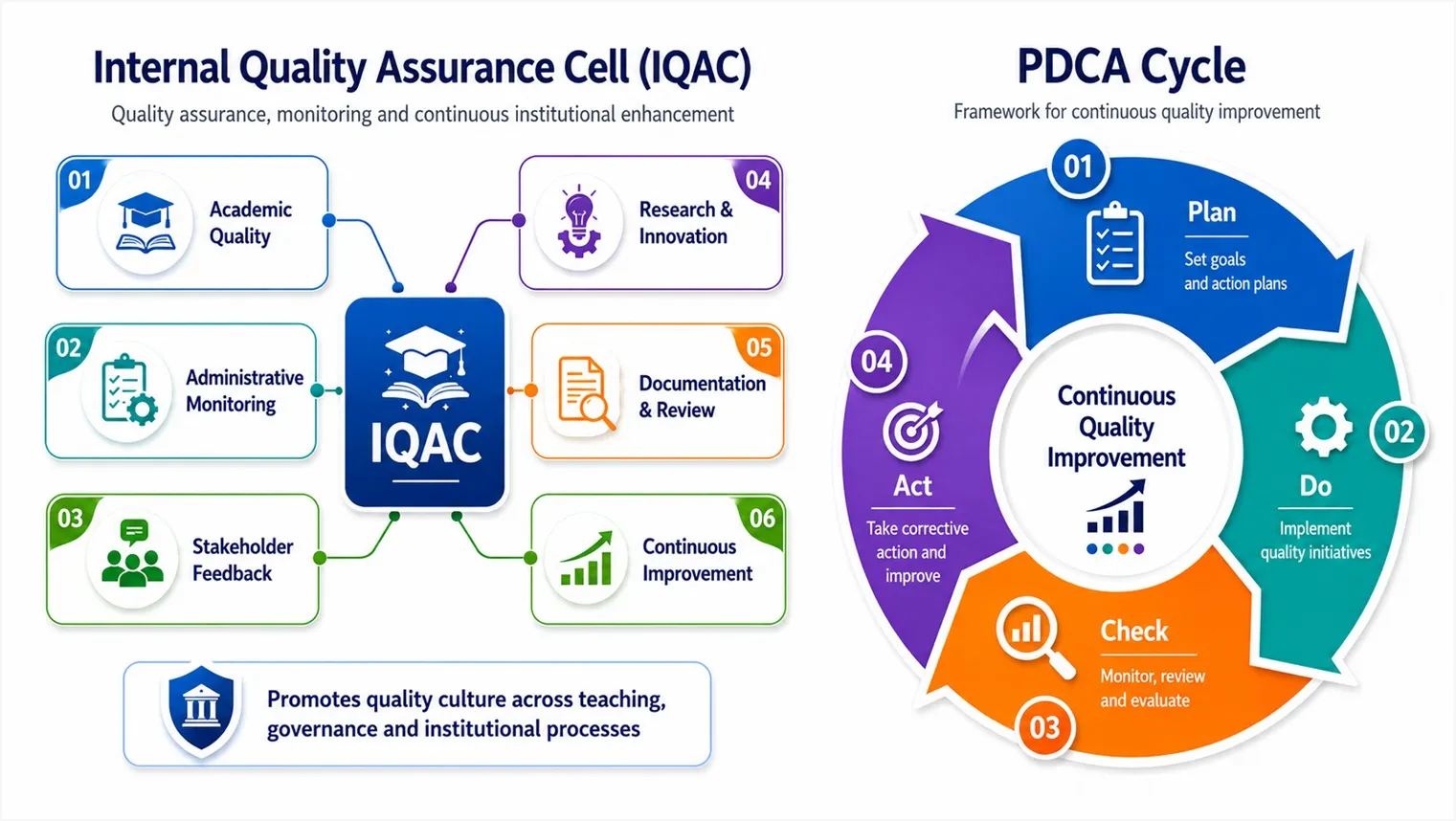
The primary objective of IQAC is to develop and sustain a quality culture through systematic planning, implementation, monitoring, evaluation, and improvement of institutional processes. It ensures that academic and administrative activities are aligned with the vision and mission of the institution, regulatory requirements, accreditation standards, and the evolving needs of pharmaceutical education.
IQAC regularly conducts meetings, reviews institutional performance, monitors quality initiatives, and facilitates the implementation of best practices across various academic and administrative domains. It also promotes stakeholder participation by collecting and analysing feedback from students, faculty, alumni, employers, and other stakeholders for continuous institutional improvement.
The Cell plays a significant role in strengthening outcome-based education, curriculum delivery, student mentoring, faculty development, research promotion, documentation, internal audits, and quality-related policy implementation. By adopting the Plan–Do–Check–Act (PDCA) cycle, IQAC ensures that every institutional activity is planned effectively, implemented efficiently, reviewed objectively, and improved continuously. Through its sustained efforts, the IQAC contributes to enhancing academic excellence, effective governance, institutional accountability, stakeholder satisfaction, and overall quality development at PSIT–Pranveer Singh Institute of Technology (Pharmacy).
Vision
To ensure a quality culture as the prime concern in pharmaceutical education by promoting academic excellence, research and innovation, effective governance, continuous improvement, and stakeholder participation through internal and external support.
Mission
- To develop and implement quality benchmarks for the continuous improvement of academic performance, administrative operations, and institutional governance.
- To promote systematic planning, monitoring, evaluation, feedback analysis, and corrective measures to enhance quality effectively.
- To strengthen student support, faculty development, research culture, documentation, and best practices for sustained institutional excellence.
IQAC Members
| 1 | Chairman |
| Prof. Pranay Wal, Director, PSIT- Pharmacy | |
| 2 | Dean IQAC |
| Prof. Ankita Wal, PSIT- Pharmacy | |
| 3 | Representative from Administration |
|
|
| 4 | Faculty Representatives |
|
|
| 5 | Management Representatives |
| Mr. S.P.S. Chauhan, Project Manager, PSIT Group | |
| 6 | Representatives from Students and Alumni |
|
|
| 7 | Representatives from Employers/Industrialists/Stakeholders |
|
Strategies
- Promoting outcome-based, student-centric, and technology-enabled teaching-learning practices for effective attainment of Course Outcomes, Program Outcomes, and Program Educational Objectives.
- Strengthening academic performance through structured remedial classes, GPAT preparation classes, bridge courses, slow-learner and advanced-learner support, and regular monitoring of student progression.
- Enhancing curriculum delivery through value-added courses, certificate programs, technical training sessions, skill-development workshops, industrial exposure, and practice-oriented learning in pharmaceutical sciences.
- Improving the transparency, credibility, and effectiveness of assessment and evaluation practices through internal audits, result analysis, attainment analysis, question paper mapping, and corrective academic measures.
- Organizing regular faculty development programs, staff training programs, orientation sessions, workshops, seminars, and professional competency enhancement activities for teaching and non-teaching staff.
- Conducting student training programs focused on communication skills, personality development, interview preparation, technical skills, laboratory practices, entrepreneurship, innovation, and placement readiness.
- Promoting a strong research culture through implementation of research policy, seed funding support, funded project initiatives, publications, patents, intellectual property generation, consultancy, and research collaborations.
- Encouraging innovation and entrepreneurship through IIC activities, start-up awareness programs, hackathons, idea competitions, prototype development, industry mentoring, and participation in innovation-based platforms.
- Strengthening collaboration with pharmaceutical industries, hospitals, research organizations, professional bodies, academic institutions, alumni, and other stakeholders for training, internships, projects, placements, and knowledge exchange.
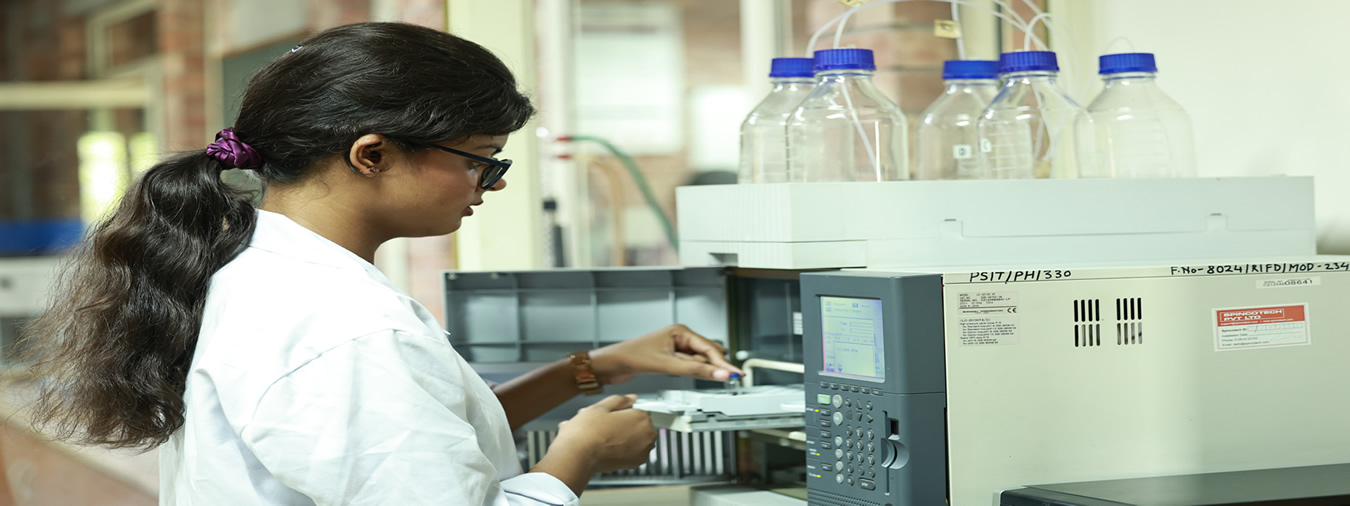
- Ensuring adequacy, maintenance, modernization, and optimal utilization of laboratories, instruments, library resources, ICT facilities, herbal garden, animal house facility, classrooms, and student-support infrastructure.
- Facilitating holistic student support through mentor-mentee counselling, career guidance, grievance redressal, professional counselling, placement assistance, alumni interaction, and co-curricular and extracurricular activities.
- Promoting community engagement through health awareness programs, health day celebrations, medical camps, blood donation camps, disease awareness drives, environmental activities, and social outreach programs.
- Encouraging ethical values, professional responsibility, environmental sustainability, gender sensitization, and social commitment through institutional activities and awareness initiatives.
- Strengthening accreditation, ranking, and quality assurance preparedness through regular internal audits, documentation review, stakeholder feedback analysis, action taken reports, best practices, and implementation of the PDCA cycle.
Functions
- Development and application of quality benchmarks for academic, administrative, research, and student-support activities.
- Establishment of quality parameters for effective planning, implementation, monitoring, and review of institutional processes.
- Promotion of learner-centric, outcome-based, and technology-enabled teaching-learning practices for quality education.
- Collection, analysis, and utilization of feedback from students, faculty, alumni, employers, parents, and other stakeholders.
- Dissemination of information related to quality initiatives, institutional achievements, best practices, and quality enhancement measures.
- Organization of workshops, seminars, training programmes, Faculty Development Programmes, and quality-related activities for faculty, staff, and students.
- Documentation of academic, administrative, research, extension, and student-development activities contributing to quality improvement.
- Acting as a nodal agency for coordinating quality-related activities, adoption of best practices, and dissemination of institutional quality initiatives.
- Development and maintenance of institutional data, records, reports, and databases for quality assurance, accreditation, ranking, and regulatory compliance.
- Periodic conduct of academic audits, administrative audits, internal quality reviews, and follow-up action for continuous institutional improvement.
- Monitoring of Outcome-Based Education practices, including CO-PO attainment, result analysis, assessment review, and corrective academic measures.
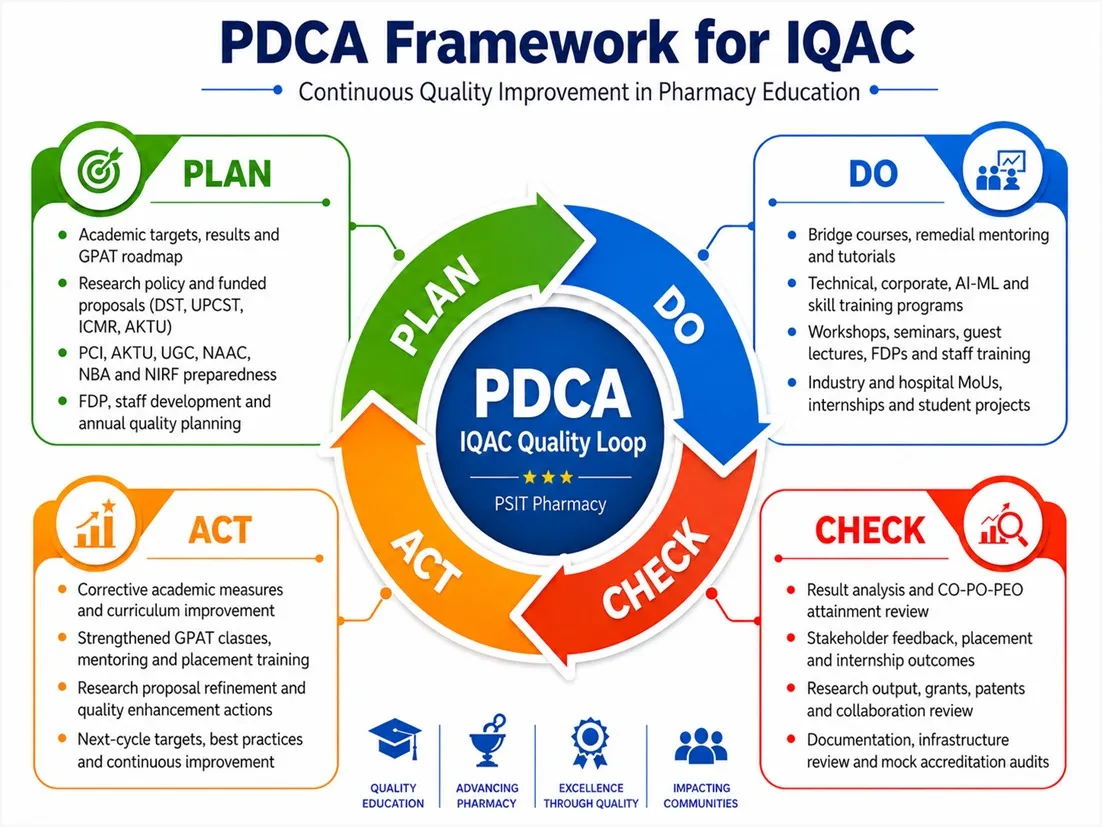
- Facilitation of the PDCA cycle for systematic planning, implementation, evaluation, and continuous quality enhancement.
Outcomes of IQAC Activities
- Strengthened accreditation, ranking, statutory compliance, and quality assurance preparedness for PCI, AKTU, UGC, NAAC, NBA, NIRF, AISHE, and other regulatory bodies.
- Implementation of the Plan–Do–Check–Act (PDCA) framework for data-driven academic monitoring, evidence-based review, and corrective action planning.
- Improved academic excellence with 2 students securing positions in the Top-10 AKTU University Merit List during AY 2024–25.
- Strengthened B.Pharm academic performance with 78.92% pass in First Year, 85.26% in Second Year, and 86% in Third Year.
- Improved attainment of Course Outcomes, Program Outcomes, and Program Educational Objectives through OBE practices, CO-PO mapping, result analysis, and assessment review.
- Strengthened student mentoring through bridge courses, remedial classes, tutorials, academic counselling, and internal assessment tracking.
- Improved student progression with 55 placed students, 23 self-employed students, and 13 students progressing to higher studies in AY 2024–25.
- Strengthened GPAT support with 4 GPAT qualifiers, including high percentiles of 98.8, 96.81, and 96.4.
- Improved academic resource planning with a Student–Faculty Ratio of 12.78 during AY 2024–25.
- Improvement in Scopus-indexed/reputed research publication output, with 86 research publications reported during AY 2024–25.
- Strengthened research and IPR outcomes with 6 granted patents and 24 cumulative book chapters.
- Promotion of innovation and student projects through Tech Expo, project exhibitions, and student innovation models such as Hydrasphere and Thermoflex.
- Recognition of student innovation through a ₹50,000 prize won by a student for project-based innovation.
- Successful conduct of workshops, seminars, guest lectures, conferences, FDPs, staff training programmes, and student development activities.
- Strengthened industry, hospital, academic, alumni, and professional collaborations for internships, training, projects, placements, and knowledge exchange.
- Promotion of technology-enhanced learning through ICT-enabled teaching, AI-ML exposure, game-based learning, and digital learning resources.
- Strengthened stakeholder feedback system for continuous improvement in academic, administrative, research, and student-support processes.
- Upgradation and optimal utilization of laboratories, instrumentation facilities, library resources, ICT infrastructure, herbal garden, and animal house facility.
- Improvement in curricular, co-curricular, extracurricular, professional, cultural, sports, innovation, and outreach activities for holistic student development.
- Strengthened quality culture through academic audits, self-audit reports, documentation, action taken reports, best practices, and closed-loop quality improvement.
Distinctiveness
Supporting DocumentPSIT–Pranveer Singh Institute of Technology (Pharmacy) distinguishes itself through a quality-driven, industry-oriented, research-focused, and student-centric approach to pharmaceutical education. The institution integrates academic excellence with professional skill development, research innovation, healthcare awareness, sustainability, discipline, and holistic student growth.
1. Industry-Oriented Pharmaceutical Education
PSIT–Pharmacy follows an industry-oriented approach by integrating classroom learning with practical exposure and professional skill development. Along with the prescribed curriculum, the institution conducts GPAT classes, technical training, corporate readiness programmes, communication skill development sessions, and training in emerging areas such as Artificial Intelligence, Machine Learning, and game-based learning. These initiatives strengthen students’ academic competence, employability, higher education readiness, and professional confidence.
2. Expert Interaction and Professional Exposure
The institution regularly organizes guest lectures, seminars, workshops, and expert talks by doctors, pharmaceutical industry professionals, researchers, entrepreneurs, academicians, and alumni. These interactions expose students to current healthcare practices, pharmaceutical industry expectations, entrepreneurship opportunities, regulatory perspectives, and emerging trends in pharmaceutical sciences.
3. Industry, Hospital, and Academic Collaborations
PSIT–Pharmacy maintains active collaborations with pharmaceutical industries, hospitals, healthcare organizations, professional bodies, and academic institutions. These collaborations support industrial visits, internships, clinical exposure, hospital training, student projects, placement opportunities, and experiential learning, thereby helping students connect theoretical knowledge with real-world pharmaceutical practice.
4. Research, Innovation, and Recognition
The institution promotes a strong culture of research and innovation among faculty and students. Research activities are encouraged through publications, patents, funded projects, book chapters, consultancy, student projects, and participation in scientific events. Outstanding research and innovation contributions are recognized through institutional incentives, rewards, and appreciation mechanisms, motivating faculty and students to contribute to scientific advancement.
5. Advanced Research and Learning Infrastructure
PSIT–Pharmacy is equipped with modern laboratories, instrumentation facilities, ICT-enabled classrooms, digital learning resources, and research-support infrastructure. The institution has two AICTE-funded MODROB laboratories and a CCSEA-approved Animal House facility, enabling advanced pharmaceutical research, experimental studies, preclinical learning, and innovation-based training. These facilities strengthen both academic learning and research competence.
6. Community Healthcare and Social Responsibility
Community engagement is an important component of institutional distinctiveness. PSIT–Pharmacy regularly organizes health camps, National Health Day celebrations, patient awareness programmes, health screening activities, blood donation camps, environmental drives, and outreach initiatives. These activities promote healthcare awareness and develop ethical responsibility, empathy, and social commitment among students.
7. Student-Centric Learning Environment
The institution emphasizes holistic student development through curricular, co-curricular, extracurricular, professional, cultural, sports, innovation, and extension activities. Mentor-mentee support, academic counselling, remedial classes, bridge courses, skill enhancement programmes, and participative teaching-learning methods create a supportive and engaging academic environment.
8. Technology-Enabled and Innovative Teaching-Learning Practices
PSIT–Pharmacy promotes technology-enhanced learning through ICT-enabled teaching, digital resources, MOOC-based learning, AI-ML exposure, game-based learning, presentations, simulations, case-based learning, and interactive classroom practices. These methods improve student engagement, conceptual clarity, analytical ability, and outcome attainment.
9. Sustainable and Accessible Campus Facilities
The institution provides a modern, well-maintained, and student-friendly campus that supports academic, professional, and personal development. Facilities such as digital learning resources, advanced infrastructure, bicycle services for campus mobility, battery-operated club cars, an on-campus SBI branch, ATM facilities, and student-support services contribute to a convenient and accessible campus environment. Solar energy initiatives and green practices reflect the institution’s commitment to sustainability.
10. Quality-Centric Institutional Culture
The institution is committed to continuous quality improvement through academic planning, stakeholder feedback, internal audits, self-audit reports, action taken reports, documentation, and adherence to PCI, AKTU, UGC, and other statutory guidelines. The Internal Quality Assurance Cell follows the PDCA cycle to ensure systematic planning, implementation, review, and improvement of academic and administrative processes.
11. Discipline, Punctuality, and Accountability
Discipline is a defining feature of PSIT–Pharmacy. The biometric attendance system promotes punctuality, accountability, transparency, and professional conduct among students, faculty, and staff. The institution encourages responsibility, time management, ethical behavior, and adherence to academic schedules, preparing students for professional life.
12. Safe, Secure, and Supportive Campus Environment
The institution provides a safe and supportive learning environment through round-the-clock security, campus monitoring, disciplined hostel facilities, full-time wardens, and support staff. The campus environment ensures student safety, comfort, discipline, and well-being, thereby supporting both academic performance and personal growth.
13. Sustainable Resource Management and Green Practices
PSIT–Pharmacy promotes responsible resource utilization and environmental consciousness through energy conservation initiatives, solar panel installation, monitoring of food wastage, mindful consumption practices, and sustainability-oriented awareness activities. These practices reflect the institution’s commitment to environmental stewardship and sustainable development.
Through its distinctive integration of pharmaceutical education, research, innovation, professional training, quality assurance, social responsibility, discipline, and sustainability, PSIT–Pharmacy continues to develop competent, ethical, skilled, and socially responsible pharmacy professionals.