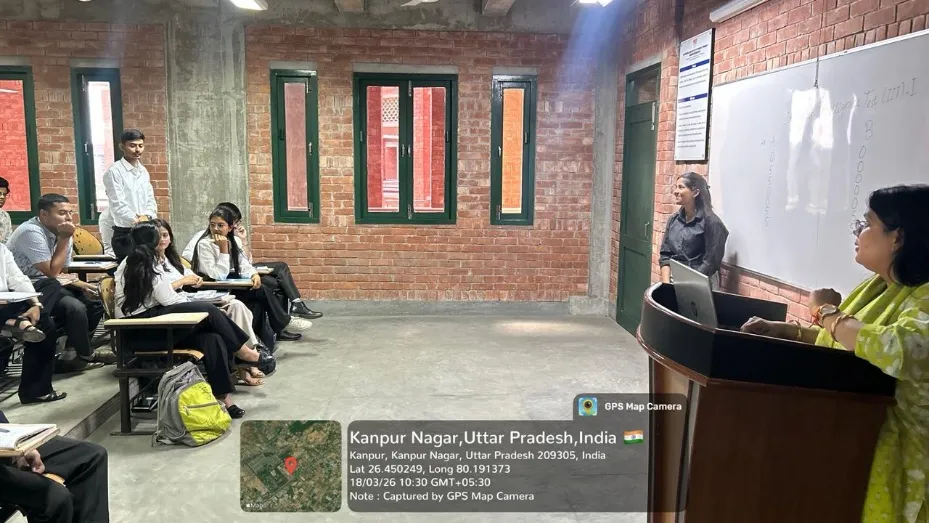
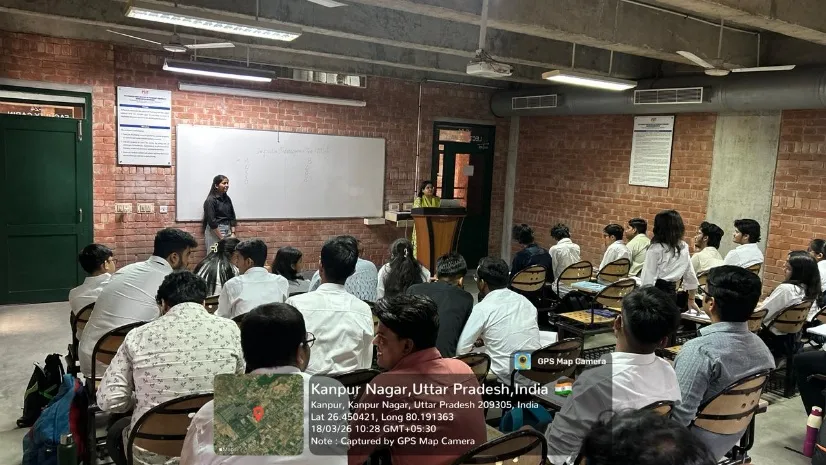
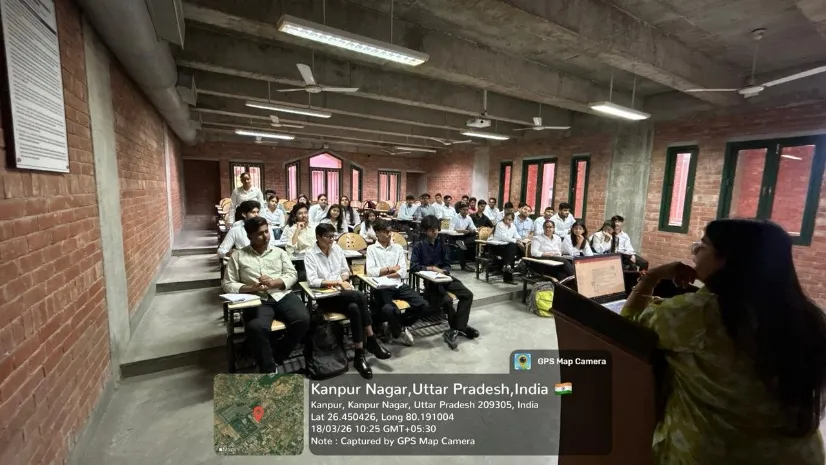
The department adopts innovative teaching-learning practices such as role play, brainstorming sessions, creative learning activities, case studies, quiz-based learning, and team-based classroom exercises to make the teaching-learning process more interactive, engaging, and student-centric. These methods encourage students to apply concepts, participate actively, think critically, and learn collaboratively.
Such activities help in developing conceptual understanding, analytical ability, communication skills, teamwork, creativity, and problem-solving aptitude. These practices also contribute to confidence building, active classroom participation, and experiential learning.
Sample Activity Report:
Impulse Intelligence Test
INTRODUCTION
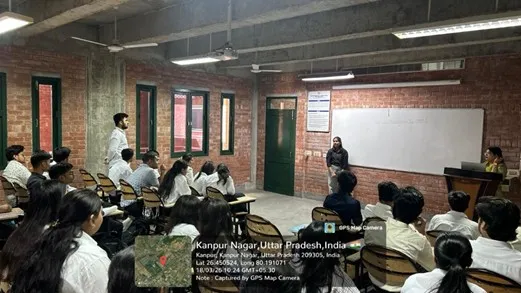
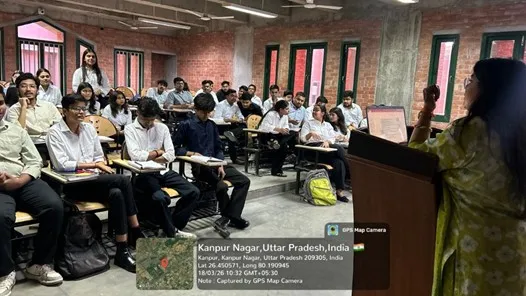
As part of innovative teaching-learning practices, a quiz-based classroom activity titled “Impulse Intelligence Test” was conducted on 18 March 2026 from 9:45 am to 10:30 am at G24, PSIT-Pharmacy for students of Human Anatomy and Physiology II (BP201T). The activity was designed to create an interactive and engaging learning environment while reinforcing students’ understanding of the topic Central Nervous System and Spinal Cord.
The activity followed a gamified learning approach, encouraging students to participate actively, think critically, and apply subject knowledge in a collaborative setting.
OBJECTIVES
- To reinforce the concepts of anatomy and physiology through an engaging classroom activity
- To promote active participation and collaborative learning among students
- To strengthen critical thinking and problem-solving ability
- To improve teamwork and communication skills
- To make learning more interactive, enjoyable, and student-centered.
NUMBER OF PARTICIPANTS
A total of 40 students participated in the activity. The class was divided into two teams: Team A and Team B, promoting collaboration, enthusiasm, and healthy competition.
ACTIVITY HIGHLIGHTS
The quiz activity was conducted in a team-based format and included multiple rounds of questions ranging from basic conceptual understanding to advanced application-oriented questions. Students actively discussed answers within their teams before responding, thereby encouraging brainstorming and peer learning.
Innovative elements such as:
- Bonus marks for passed questions
- Penalties for unfair means
- Score-based competition
were included to enhance engagement, ensure fair play, and maintain student interest throughout the session.
The activity successfully created a classroom atmosphere that promoted:
- Active learning
- Analytical thinking
- Communication
- Teamwork
- Conceptual clarity
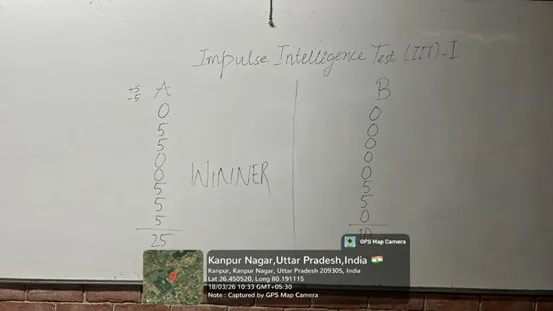
Scoring Pattern
- Correct Answer = 5 marks
- Wrong / No Answer = 0 marks
- Bonus Answer = +5 marks
- Cheating / Unfair Means = –5 marks
Team A demonstrated strong conceptual understanding and effective teamwork, and emerged as the winning team.
PROGRAM OUTCOMES (POs) ATTAINED
The most suitable Program Outcomes (POs) for this activity are:
- PO1 – Pharmacy Knowledge
- PO3 – Problem Analysis
- PO5 – Leadership Skills
- PO8 – Communication
These four are the strongest and most justifiable, as the activity reinforced students’ subject knowledge, enhanced their critical thinking and analytical abilities, encouraged team participation and leadership, and improved communication and collaborative learning skills.
Justification of POs.
- PO1 – Pharmacy Knowledge:
The activity strengthened students’ conceptual understanding of Human Anatomy and Physiology II, especially the topic Central Nervous System and Spinal Cord.
- PO3 – Problem Analysis:
Students were required to think critically, analyze questions, and make quick decisions while answering both conceptual and application-based quiz questions.
- PO5 – Leadership Skills:
The team-based format promoted teamwork, active participation, coordination, and leadership among students during the activity.
- PO8 – Communication:
Students improved their communication skills through team discussions, collaborative answer formulation, and active classroom interaction.
Learning Outcomes / Impact
- improved conceptual understanding of CNS and Spinal Cord
- enhanced student engagement and classroom participation
- better teamwork and peer interaction
- improved communication and confidence
- strengthened analytical thinking and quick decision-making
The activity also reflected the use of innovative and student-centric teaching-learning methodology in the classroom.
CONCLUSION
The Impulse Intelligence Test was a successful example of gamified and interactive learning used as an innovative teaching-learning practice. The activity effectively combined subject learning with participation, teamwork, and problem-solving, making the classroom experience more engaging and meaningful for students.
ACKNOWLEDGEMENT
Special thanks to the students for their energetic participation, which ensured the success of the event. Their enthusiasm and dedication made Impulse Intelligence Test a memorable and impactful experience.